There is no official minimum CIBIL score for a credit card. Here is what RBI and banks state, how to check your report free, and what to do at each stage.
Quick Verdict
There is no official minimum CIBIL score for a credit card. RBI sets the 300 to 900 scale, but each bank decides its own cut-off, and the bank pages we read do not publish one. So the CIBIL score for a credit card is a risk signal that banks weigh with income, existing loans and your repayment record, not a single pass mark.
As of November 2026, the practical rule is simple: check your score and report before you apply, fix errors, and apply to one bank at a time. If your score is weak, an FD-backed card is the safer route.
Question | Short answer |
|---|---|
Is there an official minimum score? | No. RBI fixes the 300 to 900 scale; banks set their own cut-offs |
Do bank pages state a score? | Axis Neo, Horizon and Select list age and, for Select, ₹6 lakh income, but no score |
Can I check my score free? | Yes, one free full credit report a year from each credit bureau |
What if my score is low? | Fix report errors, cut utilisation, or take an FD-backed card |
Does applying hurt my score? | Each application can create a hard enquiry |
What Is the Minimum CIBIL Score to Get a Credit Card?
Banks approve cards on a bundle of factors: your score, your income, your age, existing EMIs and how you have repaid past credit. Axis Bank's Neo, Horizon and Select pages, for example, state an age range of 18 to 70. Select adds a minimum net income of ₹6 lakh a year. None of the three names a CIBIL score. Each page also says the criteria are only indicative and that the bank can approve or decline any application.
That is why one person with a given score is approved by one bank and declined by another. A premium card asks more of you than an entry-level one. A card backed by your own fixed deposit asks the least. Our list ofbest credit cards for a low CIBIL scorecovers that FD-backed route in detail, so we do not repeat it here.
Be wary of any site that gives one magic number. If a bank does not publish a cut-off, a number quoted online is a guess. This article sticks to what RBI and the banks state.
What Do RBI and the Banks Actually Say?
The RBI Credit Information Reporting Directions, 2025 (dated 6 January 2025) set the rules that every credit bureau follows. Here is what they say that matters when you apply for a card.
Topic | What the official source states |
|---|---|
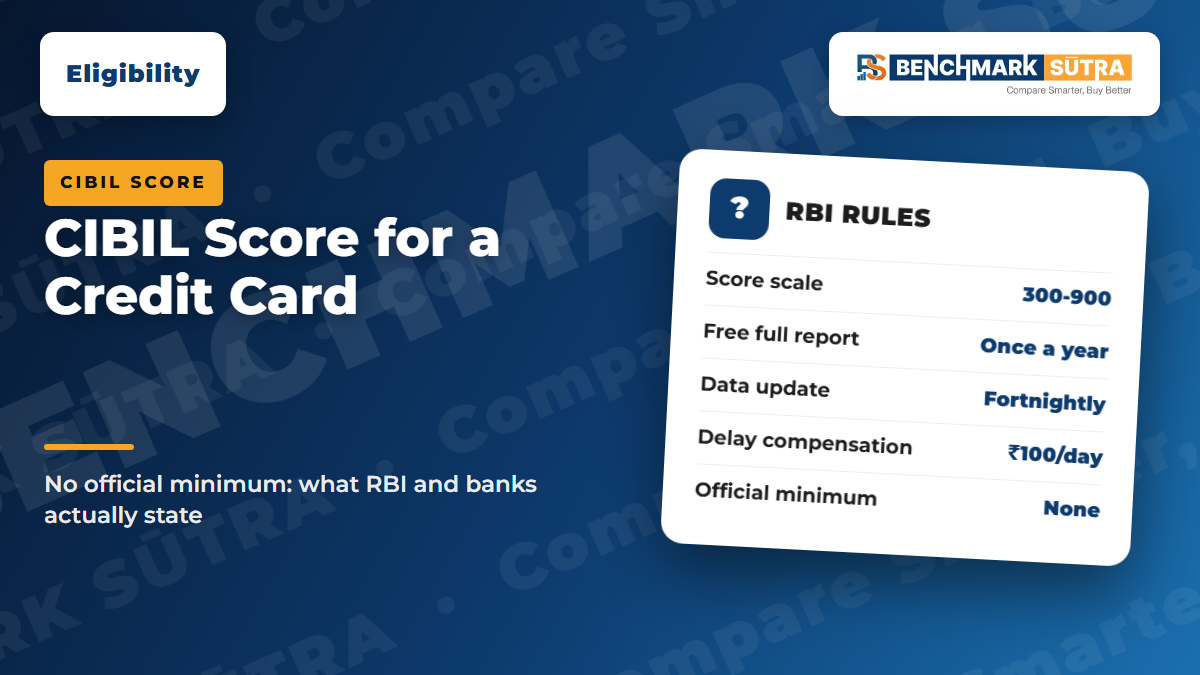
Score scale | Credit scores are calibrated from 300 to 900 by all credit bureaus |
Free report | One free full credit report, including the score, once a year (January to December), on request after authentication |
Data updates | Lenders and bureaus update data on a fortnightly basis, as on the 15th and the last day of each month |
Access alerts | Bureaus must send SMS or email alerts when a lender accesses your report, where your contact details are available |
Complaints | ₹100 a day compensation if a credit report complaint is not resolved within 30 days |
Two points follow. First, a repayment you made today may take up to a fortnight to show on your report, so do not apply the same day you clear a dues balance. Second, if your report has a mistake, raising a complaint is your right, and the compensation clause gives it teeth.
How Do Middle-Aged Families Improve the Odds?
Families aged 35 to 55 usually have the opposite problem to freshers. They have a long history, but also a home loan, a car loan and several cards. Banks look at the whole picture, so these steps matter most:
Check the report, not just the score.Look for loans you closed that still show as open, and for late payments you do not recognise.
Keep utilisation low.Spending close to the limit on existing cards reads as stress. Test your ratio with ourcredit utilisation calculator.
Pay at least the due date, ideally the full bill.Late payments are the clearest negative on a report.
Do not stack applications.Readhow hard and soft enquiries workbefore applying.
Show stable income.Salary slips, Form 16 or ITR support the application, as the Axis pages list.
If you are already using a limit well, a higher limit later is the better route than a new card. Our guide tohow credit limits workexplains how banks set and raise it.
What Should You Do at Each Score Situation?
Use this table as a decision aid. It is built on bank criteria, not on a fixed score band.
Your situation | Realistic next step |
|---|---|
Clean history, steady income | Apply to the card that matches your spend; one application at a time |
Recent late payment or high utilisation | Wait, pay down balances, and re-check the report next cycle |
Wrongly reported loan or default | File a dispute with the bureau and the lender before applying |
Recently rejected | Wait before re-applying; seehow long to wait after a rejection |
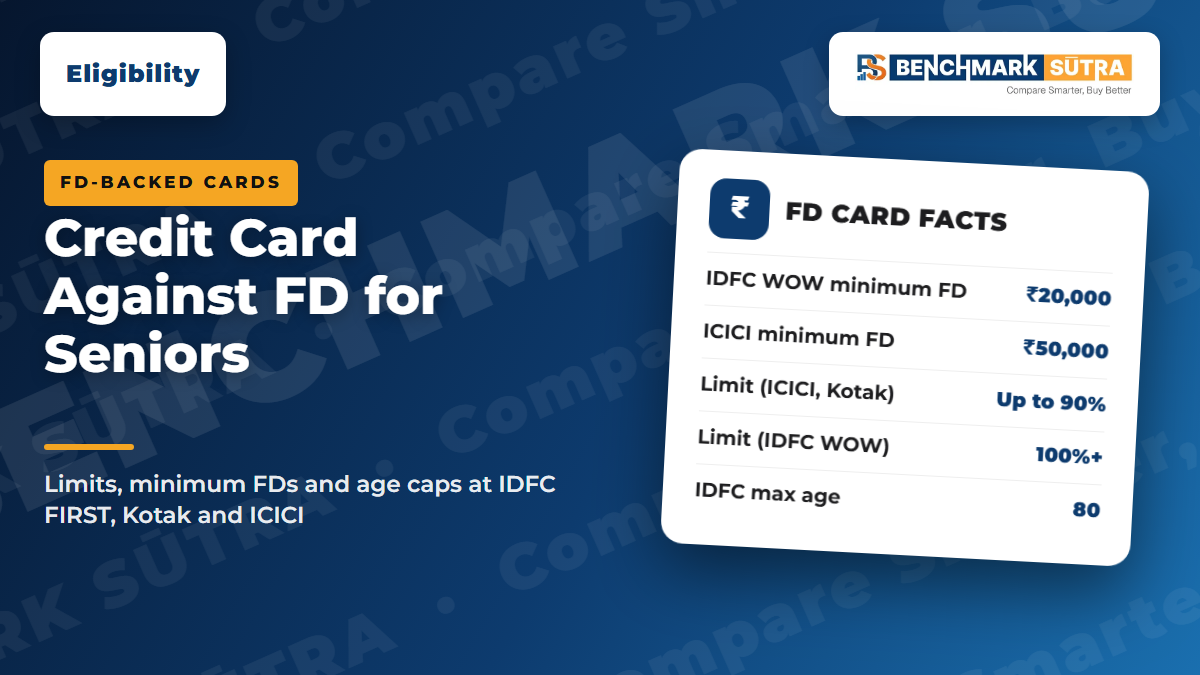
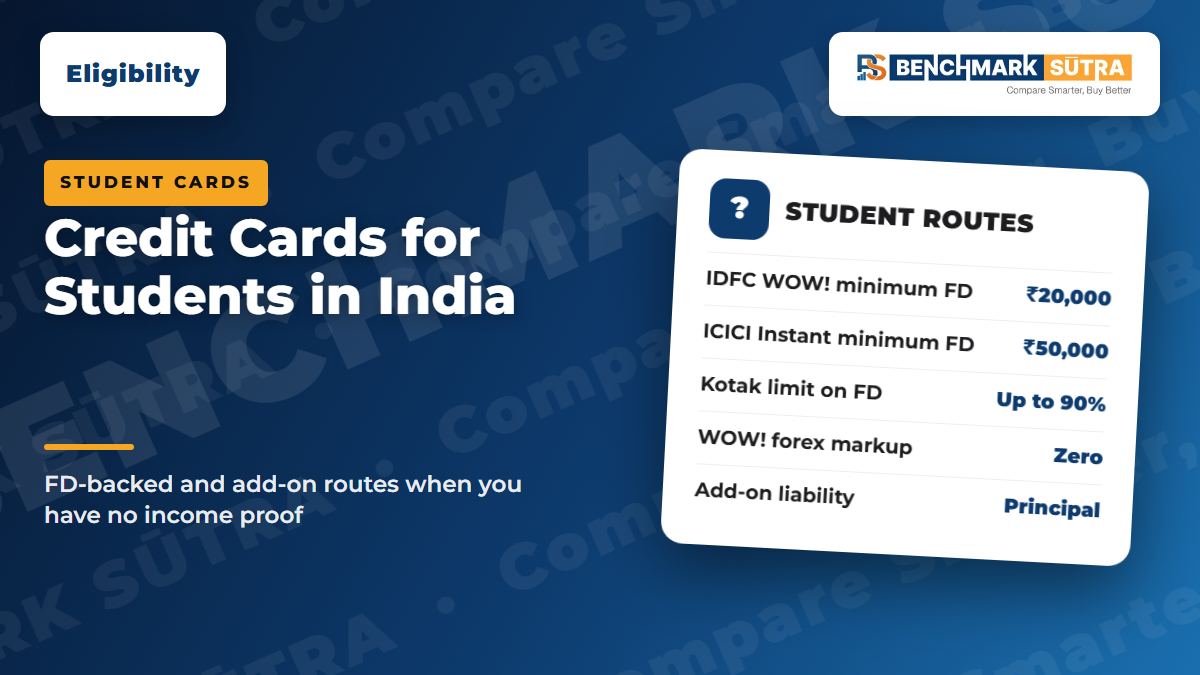
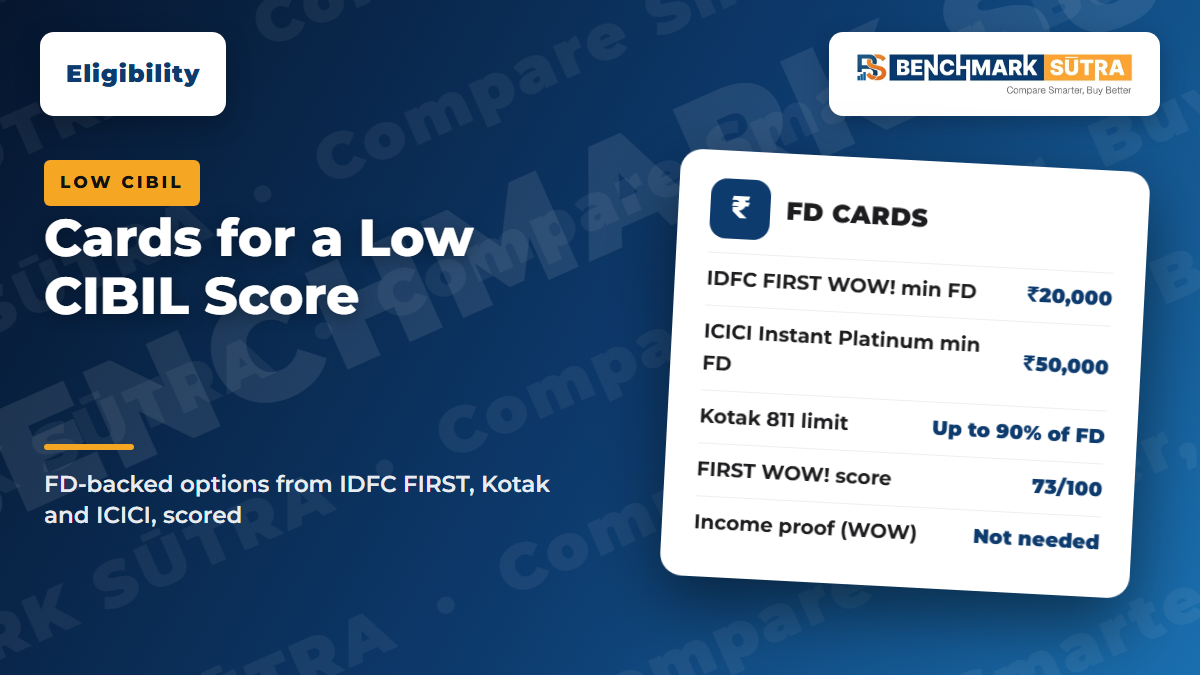
Little or no credit history | Consider an FD-backed card; IDFC FIRST WOW! lists a ₹20,000 minimum FD and no income proof |
Low income, decent history | Use the steps in7 hacks to improve approval chances with low income |
What Documents and Numbers Do Banks Ask For?
Alongside your score, the Axis Neo, Horizon and Select pages list the same document set: a PAN card, proof of income (latest payslip, Form 16 or income tax return) and residence proof such as a driving licence or electricity bill. The pages call the list indicative, so a bank may ask for more.
Utilisation is the number families overlook. It is the share of your total limit that you have used. Look at this example with two cards:
Item | Amount |
|---|---|
Total limit across cards | ₹3,00,000 |
Balance on statement date | ₹2,10,000 |
Utilisation | 70% |
Balance after paying down ₹1,20,000 | ₹90,000 |
New utilisation | 30% |
Paying ₹1,20,000 before the statement date takes the reported balance from 70% to 30% of the limit. Banks look at this when you apply for a new card or a higher limit. The change shows on your report after the next fortnightly update, so time your application after it.
Checklist
Download your free full credit report and read every account on it.
Dispute any wrong entry with the bureau and the lender.
Keep card utilisation low before the statement date.
Clear overdue amounts and wait for the next fortnightly update.
Check the bank page for age, income and document criteria.
Apply to one bank at a time and note the date.
If rejected, read the reasons in5 common rejection reasons and fixes.
Common Mistakes to Avoid
Trusting a single "minimum score" number from a website.
Applying to many banks in one week.
Paying a bill late "just once" before an application.
Ignoring errors on the report because the score looks fine.
Closing an old card with a long clean history right before applying.
Assuming a rejection means a bad score. It can also be income, age or documents.
Related on benchmarksutra
FAQs
What is the minimum CIBIL score to get a credit card?
There is no official minimum. RBI sets the 300 to 900 scale, and each bank applies its own cut-off, which the pages we read do not publish.
Can I get a credit card with no CIBIL score?
Sometimes. FD-backed cards depend on your deposit rather than your history; IDFC FIRST WOW! states that no income proof or credit history is needed, with a minimum FD of ₹20,000.
How often is my credit score updated?
RBI's directions require lenders and bureaus to update data fortnightly, as on the 15th and the last day of the month. A payment may take up to a fortnight to show.
How can I check my CIBIL score for free?
Under RBI's directions, each bureau must give you one free full credit report, including the score, once a year on request after authentication.
Does checking my own score reduce it?
Our enquiry guide explains that checking your own report is a soft enquiry, whereas a card application is usually a hard enquiry.
Why was my card rejected with a good score?
Income, age, documents, existing EMIs and the bank's own policy also matter. See our rejection guide for the common reasons.
What if there is a mistake on my credit report?
Raise a dispute with the bureau and the lender. RBI's directions provide ₹100 a day compensation if a complaint is not resolved within 30 days.
Official Sources and Editorial Note
https://www.rbi.org.in/Scripts/BS_ViewMasDirections.aspx?id=12764
https://www.axis.bank.in/cards/credit-card/axis-bank-neo-credit-card
https://www.axis.bank.in/cards/credit-card/axis-horizon-credit-card
https://www.axis.bank.in/cards/credit-card/axis-bank-select-credit-card
This article is written from official sources and does not rely on third-party wording.