

 By
By Hidden costs of buying AC in India start showing up when buyers assume the listed product price is the full cost of ownership.
Many Indian buyers think they have locked the cost of an AC the moment they click “Buy Now.” That is usually where the confusion starts.
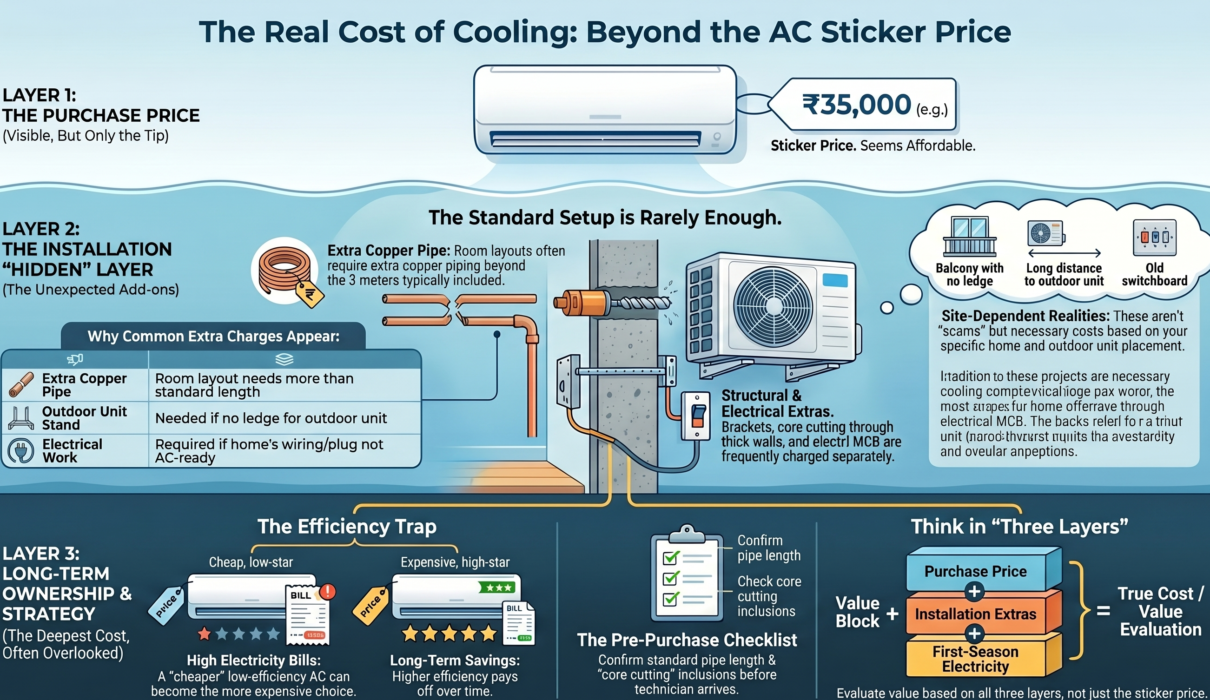
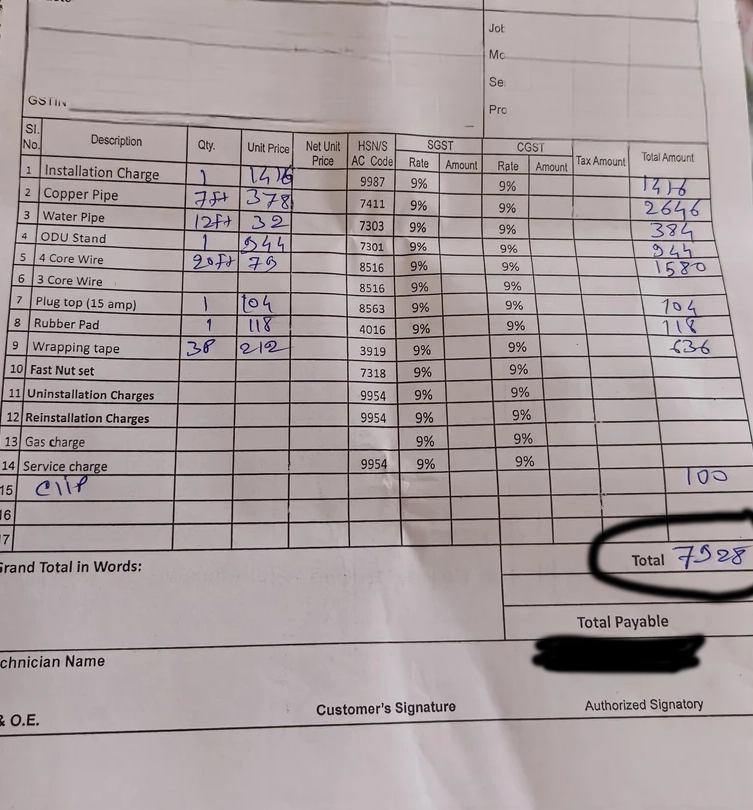
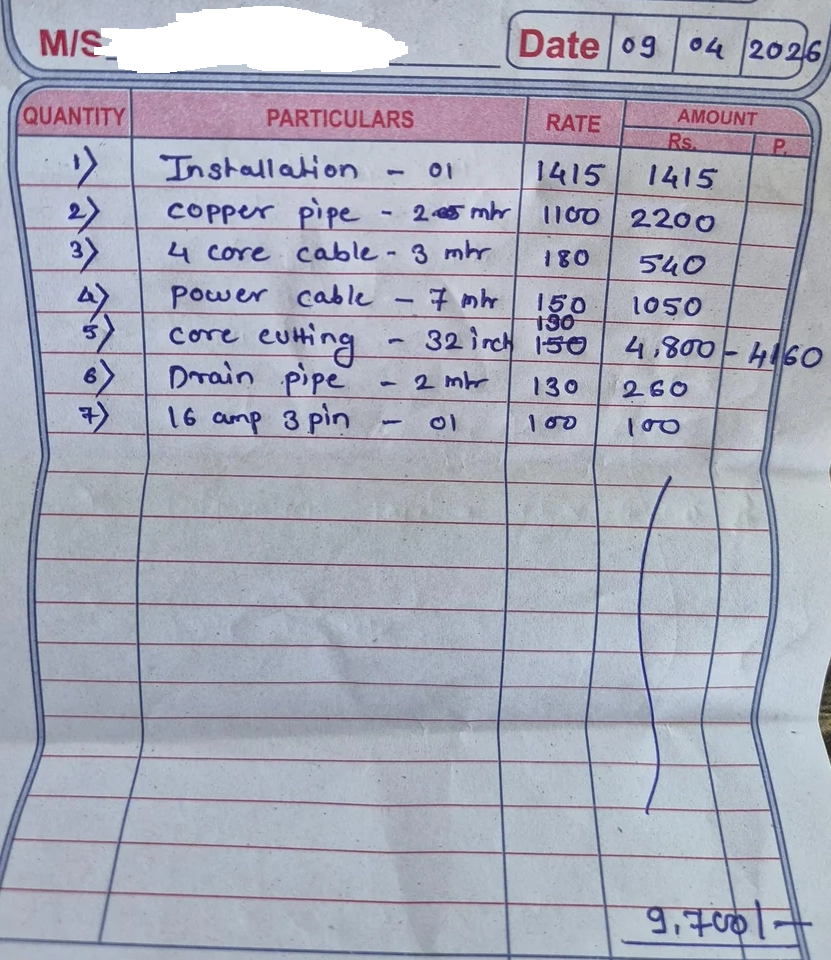
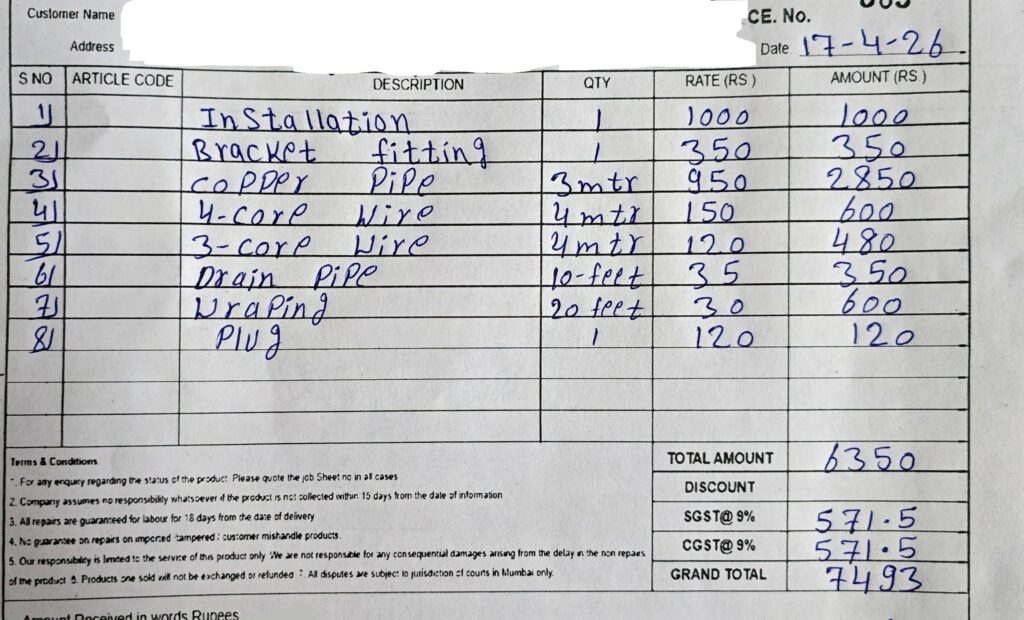
The listed AC price is often only the beginning. By the time installation is finished, the buyer may also be dealing with extra copper pipe, outdoor-unit bracket charges, drilling or core cutting, drain-pipe additions, electrical work, stabilizer questions, and then the first electricity bill after usage starts.
This page is a practical guide to the real cost of buying and owning an AC in India. It is not a complaint page about installers, and it is not a generic power-bill article. The goal is simpler: help buyers budget properly before purchase so the AC does not become more expensive than expected.
Table of Contents
Why AC price alone is misleading
The product listing gives you the product price. It does not automatically tell you the full installed cost or the first-season ownership cost.
That is why a seemingly cheaper AC can still become the more expensive choice after:
- extra installation materials
- longer pipe runs
- bracket requirements
- difficult drilling
- electrical readiness work
- higher running cost due to heavier usage or lower efficiency
A buyer comparing only sticker price is comparing only the first layer of cost. In real-world Indian purchase conditions, that is not enough.
Common hidden installation costs in India
These are the cost categories that commonly surprise buyers.
| Cost category | Why it appears | Why buyers get surprised |
| Extra copper pipe | Standard included pipe length is sometimes not enough | Room layout or outdoor-unit placement needs more length |
| Outdoor-unit stand / bracket | Needed when the outdoor unit cannot simply rest in an included position | Buyers assume installation covers it automatically |
| Drilling / core cutting | Required when the wall path is difficult or thicker than expected | Often depends on wall type and site condition |
| Drain pipe | Needed to manage water outlet route cleanly | Sometimes treated as extra material |
| Electrical wiring / plug / MCB / electrician work | Required if the home is not fully installation-ready | Buyers assume the home side is already compatible |
| Insulation wrapping / finishing | Needed for cleaner, more complete installation | Buyers may assume all finishing is included |
| Stabilizer | May be recommended depending on model and local power conditions | Not always budgeted at purchase time |
This does not mean every installer is overcharging. Some of these extras are genuine and unavoidable. The real problem is when the buyer reaches installation day without understanding which costs are normal, which depend on the site, and which deserve scrutiny.
The hidden costs of buying AC in India become easier to manage when buyers budget for installation, accessories, and early ownership costs before purchase day.
Which extra charges are reasonable – and which need scrutiny?
This is the nuance buyers need.
Reasonable extra charges
Some extra charges are genuinely site-dependent and can be fair:
- longer-than-standard pipe run
- difficult outdoor-unit placement
- thick wall drilling or core cutting
- electrical work because the room is not installation-ready
- bracket or stand where it is genuinely needed
These are not automatically “hidden scams.” They can be legitimate installation realities.
Charges that deserve scrutiny
What deserves closer attention is not the existence of every extra charge. It is the lack of clarity around it.
Be more careful when:
- the inclusion vs exclusion is not explained in advance
- material quality is vague
- “company standard” is used without detail
- charges are verbally added without a clear breakup
- the installer pushes extras without tying them to site conditions
So the correct buyer mindset is:
some extras are normal, but surprise billing should not be normal.
Hidden Costs of Buying AC in India: Common Installation Extras
Two buyers can purchase the same AC and still face very different final installation costs.
The hidden costs of buying AC in India are easiest to miss when buyers focus only on the listed product price and ignore installation-day realities.
Longer pipe runs
If the outdoor unit has to be placed far from the indoor unit, extra piping becomes more likely.
Difficult wall access
Some walls are easier to drill than others. Thicker walls or more difficult paths can increase work complexity.
Balcony or outdoor-unit placement
Outdoor-unit positioning can affect bracket need, pipe length, and routing difficulty.
Electrical readiness of the home
A room that is not already ready for AC load can create separate electrical work requirements.
This is why the same AC model can cost different amounts to install in different homes. The site matters.
The recurring cost buyers forget: electricity
Installation is the first surprise. Electricity is the second.
A buyer can spend heavily on the AC and installation, then still get an unexpected running-cost shock if:
- the AC is used for long hours
- tonnage is higher than expected
- efficiency is lower than expected
- room heat load is severe
- thermostat setting is aggressive
This page is not the full electricity-bill explainer, so keep the rule simple:
purchase cost is one layer, installation cost is the second, electricity cost is the third.
If you want to estimate running cost after purchase, read our guide on what ISEER means in an AC and how it affects your electricity bill.
For broader AC labeling and efficiency context, buyers can also review Bureau of Energy Efficiency resources where relevant.
Why a “cheaper” AC can become more expensive over time
This is one of the most important buyer lessons.
A lower upfront-price AC can still become the weaker value decision if it comes with:
- more installation compromise
- weaker included setup assumptions
- lower efficiency under heavy usage
- more add-on requirements
- lower long-term ownership confidence
That does not mean cheap ACs are bad. It means cheap upfront price and cheap to own are not the same thing.
This is central to total-cost thinking:
- low sticker price can look attractive
- but the smarter decision often comes from comparing the full cost stack
What to budget before buying an AC
Use this practical checklist before you purchase:
- product price
- likely installation extras
- extra copper pipe possibility
- bracket or stand possibility
- drilling / wall-work possibility
- drain-pipe and finishing material possibility
- stabilizer if needed
- electrician work if the room is not ready
- first-season electricity-cost expectation
- optional accessories or upgrades
That does not mean every buyer will face all these costs. It means every buyer should at least consider them before assuming the listed price is the final spend.
How to protect yourself from bill shock on installation day
This is the most practical section on the page.
Before installation, ask:
- what exactly is included in standard installation?
- what standard pipe length is included?
- when does extra copper-pipe charging start?
- is bracket / stand included or extra?
- is drilling or core cutting included or separate?
- if electrical work is needed, who will do it and how is it charged?
- what materials are being used on site?
- will I get a charge breakup?
On installation day:
- confirm what is actually being installed
- ask before extras are added, not after
- keep invoices and charge breakup
- do not accept vague “this is normal” explanations without clarity
The goal is not confrontation. The goal is clarity.
Final verdict
The real cost of buying an AC in India is not just the sale price.
A smart buyer should think in three layers:
- purchase cost
- installation cost
- ownership cost
Installation extras are normal in many cases. Surprise billing should not be.
So judge AC value by total ownership cost, not just product price. That is the more practical, budget-aware way to buy.
Related Reads
If you want the broader framework for choosing the right AC, use our AC buying guide for Indian buyers.
If you want to estimate running cost after purchase, read our guide on what ISEER means in an AC and how it affects your electricity bill.
If you are unsure whether an external stabilizer should be part of your budget, read our guide on whether an AC needs a stabilizer in India.
If you want to understand installation material quality, read our guide on aluminum vs copper AC pipes.
If you are comparing actual products, see our guides to the best 1 ton inverter AC in India, best 1.5 ton 3-star inverter AC in India, and best 1.5 ton 5-star inverter AC in India.
If your budget is capped, see our guide to the best AC under ₹40,000 in India.
FAQ
What are the hidden costs of buying an AC in India?
Hidden or overlooked costs usually include installation extras, extra copper pipe, bracket or stand charges, drilling, drain-pipe additions, electrical readiness work, stabilizer cost if needed, and ongoing electricity cost after purchase.
Is AC installation free in India?
Not always in the full practical sense. Some form of standard installation may be included, but site-dependent extras often still apply.
Why do installers charge extra for copper pipe?
Because the included standard pipe length is sometimes not enough for the real installation path. Longer runs usually require extra material.
What should be included in AC installation?
This varies by seller, brand policy, and installer. Buyers should confirm exactly what “standard installation” includes before installation day.
Do I need to budget separately for a stabilizer?
Sometimes yes. It depends on the AC model’s voltage tolerance and your local power conditions. It should not be assumed automatically, but it should not be ignored either.
Why does a cheap AC sometimes become more expensive to own?
Because lower sticker price does not account for installation extras, add-ons, or electricity cost over time.
How do I avoid surprise AC installation charges?
Ask in advance what is included, what triggers extra charges, what standard pipe length is covered, and get a charge breakup where possible.
Is electricity cost part of AC ownership cost?
Yes. It is one of the most important recurring parts of ownership cost, especially in long summer usage.