

 By
By Aluminum vs copper pipes AC is one of the most ignored installation-day quality decisions Indian buyers face.
When buyers think about AC quality, they usually focus on tonnage, star rating, and brand. But one of the easiest ways to lose value on installation day sits outside the brochure: the quality of the pipe connecting the indoor and outdoor units.
This page is a practical Indian guide to understanding why copper pipe quality matters, how installation shortcuts can hurt cooling and long-term reliability, and what buyers should check before accepting an AC installation.
This is not a fear-based rant. Most installers are not out to scam every customer. But installation-day upselling, vague substitutions, and “same-same quality” claims are real buyer risks in India. That is why this page exists.
Table of Contents
What do AC installation pipes actually do?
The installation pipe carries refrigerant between the indoor and outdoor units. That makes it part of the AC’s working path, not a decorative accessory.
If the pipe material is weak, the insulation is poor, the bends are rough, or the joints are badly done, the system can become more vulnerable to:
- gas leakage risk
- weaker cooling confidence
- rework later
- long-term ownership frustration
So buyers should not think of installation piping as a trivial extra. It is one of the hidden quality layers in the AC system.
Copper vs aluminium pipes: what is the real difference?
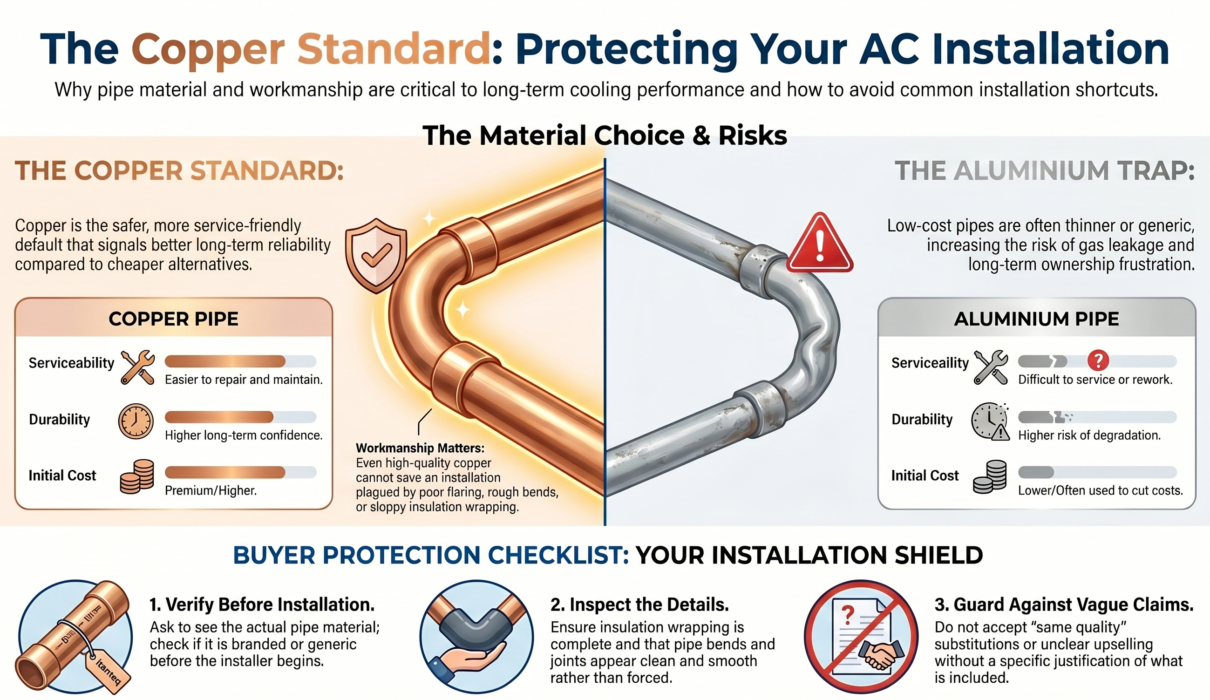
An aluminum vs copper pipes AC decision should be treated as a workmanship and long-term reliability question, not just a material label.
This is the core tradeoff.
Copper is usually the safer default
In practical buyer terms, copper is usually easier to trust for AC installation because it is generally seen as the more service-friendly and dependable option.
That is why buyers often respond strongly to “copper piping” language. It signals:
- better long-term confidence
- easier serviceability
- lower fear around hidden compromise
- a more credible installation baseline
Aluminium is often chosen because it is cheaper
Aluminium or cheaper pipe alternatives can enter the conversation because they lower cost. That is where the installation trap begins.
The buyer thinks they are getting proper installation quality, but the on-site material may be:
- cheaper than expected
- thinner than expected
- generic instead of branded
- verbally described as “same quality”
That does not mean every aluminium pipe setup is automatically bad. It means the buyer should understand why installers or local vendors may prefer lower-cost material.
What buyers should really compare
Do not reduce the decision to one line like “copper good, aluminium bad.”
A smarter buyer asks:
- what material is actually being installed?
- does it look branded or generic?
- is the thickness credible for the job?
- is insulation wrapping done properly?
- are bends and joints handled cleanly?
- is the installer being clear or vague?
Does copper always mean better installation?
No.
An aluminum vs copper pipes AC comparison matters most when buyers want to avoid hidden installation compromises and long-term reliability risks.
Copper is usually the stronger material choice, but it does not rescue bad workmanship.
A careless installer can still create problems through:
- bad bending
- poor flaring
- weak joints
- rushed finishing
- sloppy insulation wrapping
So the correct rule is simple:
- good material helps
- but installation quality still decides a lot
That is why buyers should inspect both what is installed and how it is installed.
How poor pipe quality or bad workmanship can hurt performance
This is the part buyers actually care about.
Leakage risk
Weak material, poor flaring, careless joints, or rough bending can increase long-term leakage risk. Do not treat that as guaranteed failure. Treat it as avoidable risk.
Cooling inefficiency
If the installation path is compromised, the AC may feel less confidence-inspiring over time, especially after months of use.
Rework cost
Weak installation can lead to later service visits, rework, or parts replacement that could have been avoided with a better installation on day one.
Long-term ownership pain
This is why installation quality matters even when the AC model itself is strong. Hidden shortcuts at installation can quietly destroy the value of an otherwise good purchase.
What buyers should check on installation day
This is the key protection section.
Use this checklist:
- Is the promised pipe material actually being used?
- Does the pipe look branded or generic?
- Is the insulation wrapping proper and complete?
- Are bends and joints handled cleanly?
- Is the installer pushing low-trust upgrades or substitutions?
- Is the installer vague about what is included and what is extra?
- Are you being shown the actual material before it is installed?
This is not about distrusting everyone. It is about reducing avoidable surprises.
When should a buyer care more about this?
Give this factor more weight when:
- the piping run is longer
- you are buying a premium AC
- your ownership horizon is longer
- your climate is hotter and usage is heavier
- the installer is trying to swap or downgrade material
- hidden compromise would feel especially costly later
This is the kind of buyer who should care more about installation-pipe quality instead of treating it like a minor detail.
How this connects to hidden installation costs
This page is about material quality and workmanship, not the full billing breakdown. But the two are connected.
Hidden installation compromise often sits next to hidden installation charges:
- extra piping
- unclear accessory pricing
- vague “company standard” claims
- on-site upselling
So if you want the broader billing side later, read our Hidden Costs of Buying an AC in India page when it goes live.
Final verdict
Copper is usually the stronger long-term default for AC installation pipes.
But workmanship matters heavily.
And buyers should inspect what actually gets installed, not just trust what was promised.
The smarter installation-day rule is:
- prefer credible copper pipe quality
- do not ignore thickness and insulation
- watch for vague substitutions
- remember that poor workmanship can undermine even good material
That is how to protect the value of the AC you paid for.
Related Reads
If you want the broader framework for choosing the right AC, use our AC buying guide for Indian buyers.
If you also want to understand outdoor-unit build quality, read our guide on copper vs alloy condenser ACs.
If your budget is capped, see our guide to the best AC under ₹40,000 in India.
If you want to understand the broader installation-billing side, read our guide on the hidden costs of buying an AC in India.
If you are comparing actual products, see our guides to the best 1 ton inverter AC in India, best 1.5 ton 3-star inverter AC in India, and best 1.5 ton 5-star inverter AC in India.
If stabilizer decisions are also part of your installation-day choices, read our guide on does AC need a stabilizer in India.
FAQ
Is copper pipe better than aluminium pipe for AC?
Usually yes, as a practical default. Copper is generally the safer installation choice for long-term service confidence. But workmanship still matters heavily.
Why do AC installers use copper pipes?
Because copper is widely treated as the more service-friendly and dependable installation material for refrigerant lines.
Does AC pipe quality affect cooling?
Yes. Pipe material alone is not the whole story, but poor pipe quality or poor workmanship can affect long-term cooling confidence and reliability.
Can poor AC pipe quality cause gas leakage?
It can increase the risk when combined with weak joints, bad flaring, poor bends, or poor installation execution.
How do I check if the installer is using proper copper pipe?
Ask what material is being installed, inspect whether it looks branded or generic, check insulation wrapping, and do not accept vague “same quality” claims without clarity.
Does pipe thickness matter in AC installation?
Yes, but not as a single magic number. Thickness is one part of overall installation quality.
Can installers replace branded pipe with cheaper local pipe?
That risk can exist. That is why installation-day verification matters.
What should I check on AC installation day?
Check the actual pipe material, insulation, bends, joints, what is included, and whether the installer is trying to substitute or upsell without clear justification.
For broader buyer-reference context, you can also view.